Joani very wisely scheduled three nights at the Double Nickel campground so we would have plenty of time to explore some of the more interesting sights in Lincoln, NE. We both agreed the Sunken Garden was the surprise find of the day. We arrived before the heat and enjoyed quite a variety of colorful flora.
"Sunken Gardens is a Depression-era project built in a former bend of Antelope Creek and a neighborhood dumpsite. Located adjacent to Antelope Park, the land was donated by long-time Lincoln families."
"During the winter of 1930-31, Park Superintendent, E. M. Bair, hired 200 "family men" to work on park projects, including construction of Sunken Gardens. A local and national treasure was born."
The magnificent pavilion in the Sunken Gardens was designed by architect Jeffre Chadwick and built by Metal & Art.
The quote reads, "I expect to make this spot the most beautiful place in the city either in or out of the parks. The ground lends itself perfectly to the making of a sunken garden at the same time a spot rich in beauty" E.M. Bair November 1930.
In 1930, the project took about a year to complete. Workers averaged about $6.40 per week (two shifts per week) and the cost of the project totaled approximately $2500.00.
I like to help folks out whenever I can with family shots. You can usually tell when someone would like the help and with just a little eye contact and a nod, the job is yours. Hopefully, the shots are special enough that they enjoy them for years to come.
A renovation in 2005 cost about $1.7 million. The gazebo and restrooms were added, as well as the sprinkler system (1000 sprinkler heads).
Ponds are now heated, so the aquatic plants and fish stay year-round now.
I would love to see Monet's rendition of this lily pond.
The dragonfly can move at an amazing 45 miles an hour, hover like a helicopter, fly backward like a hummingbird, fly straight up, down and on either side. What is mind-blowing is the fact that it can do this while flapping its wings a mere 30 times a minute while houseflies need to flap their wings 1000 times a minute.
Our next stop was the Nebraska state capitol building. It was surrounded by homes and schools - the only official looking building in an otherwise quaint residential neighborhood.
This may be my favorite state capitol to date. It took 10 years to complete (1922 thru 1932) and cost $9.8 million. It amazes me that it was built during the Great Depression and it was paid in full when it was completed. The history of law is depicted in sculpture and inscriptions on the exterior walls.
We asked a groundskeeper if we may sneak in the back door - no problem.
We found the tour guide and asked if we were too late - he looked at his watch and said: "let's get started right now". He was full of interesting facts and history about the building. It was, in fact, the third capitol building to be built on the same spot. The first two were built with Nebraska limestone that was too soft and did not hold up well. Legislators in the first building were cautioned not to clap for fear of collapsing the structure. The current building was constructed of more durable limestone quarried in Indiana.
A staggering amount of symbolism was found in the mosaic tiles on the ceiling and floors. All were made by a New York artist, Hildreth Meiere, in her NY studio and, using the Double Indirect mosaic method, sent to Nebraska and installed.
Past, Present and Future Life on the Plains was the theme of the great foyer. Six huge Venetian glass murals were added in 1967
This one by Jeanne Reynal depicts the blizzard of 1888. We were told the story of 18-year-old Minnie Freeman, a teacher that lead her students to safety and became a reluctant hero.
Another Hildreth Meiere creation in the rotunda's dome forms a celestial rose within the mosaic dome: Temperance, Wisdom, Faith, Justice, Magnanimity, Charity, Hope, and Courage.
We crossed the rail yard on the middle bridge in the photo below and I was so impressed I wanted to stop for a picture. The view from the capitol tower was much better (and safer than the shoulder of the bridge).
This is the view from the observation deck (14th floor) of the capitol's tower. The Hobson rail yard measures three miles long by a half-mile wide.
There are 24 individuals in Nebraska's Hall of Fame. An impassioned plea by Chief Standing Bear (Ponca tribe) resulted in American Indians being recognized for the first time as persons under the law.
The circle in the center is Mother Earth. The four surrounding circles contain water, fire, air and earth. The band wrapping among these five circles depicts animal life from Nebraska's past (evidenced by fossil records).
"Genius of Creative Energy"
We visited a museum located on the University of Nebraska campus. We were lucky enough not only to find parking near the hall but parking that was in the shade! There were a lot of well-done exhibits highlighting ancient life where present-day Nebraska is situated. We were both ready to call it a day by 4:00. It might be a while before we have our all day sightseeing stamina back.
Morrill Hall was part of the Association of Science‑Technology Centers passport program (ASTC), but our membership had lapsed. It was a great time to renew (only $50 for the year).
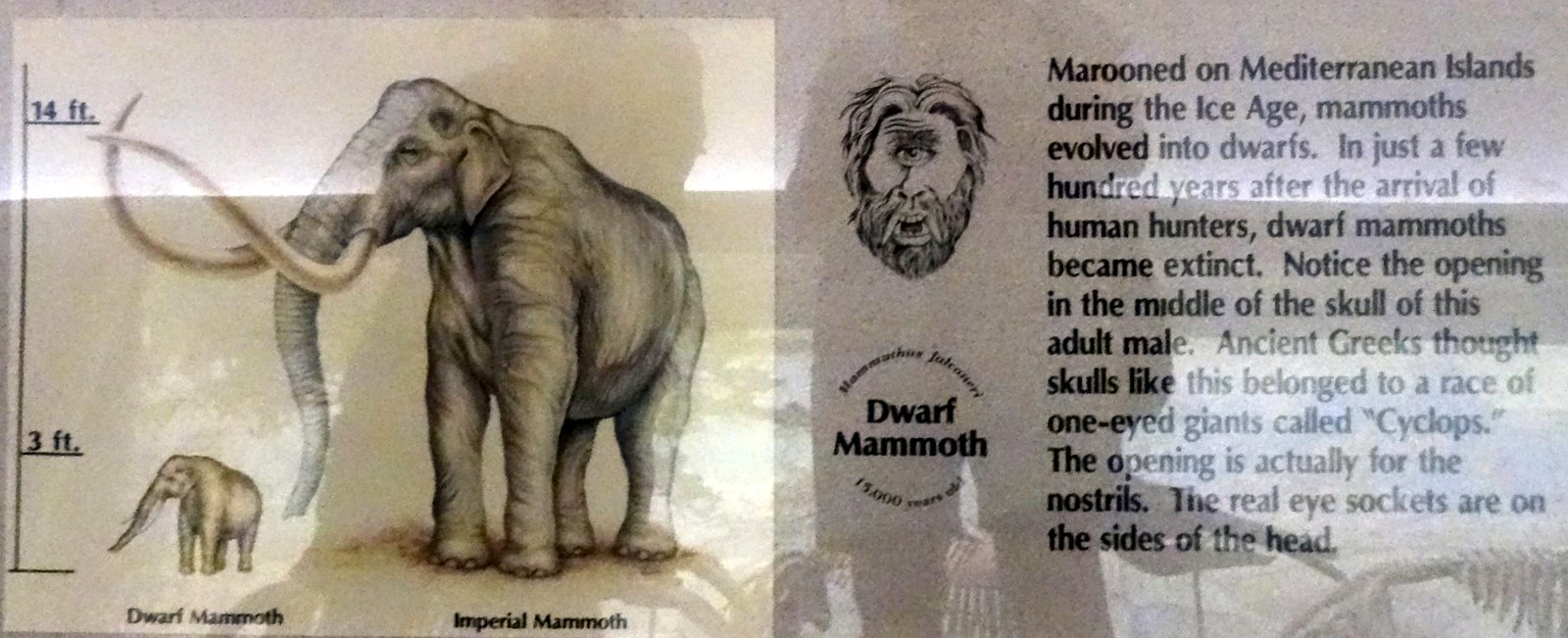
I had no idea elephants once roamed 5 continents as little as 10,000 years ago.
Camels also roamed our continent.
"Photo Ark founder and National Geographic photographer Joel Sartore has visited 40 countries in his quest to create this photo archive of global biodiversity. To date, he has completed intimate portraits of more than 6,000 species." National Geographic